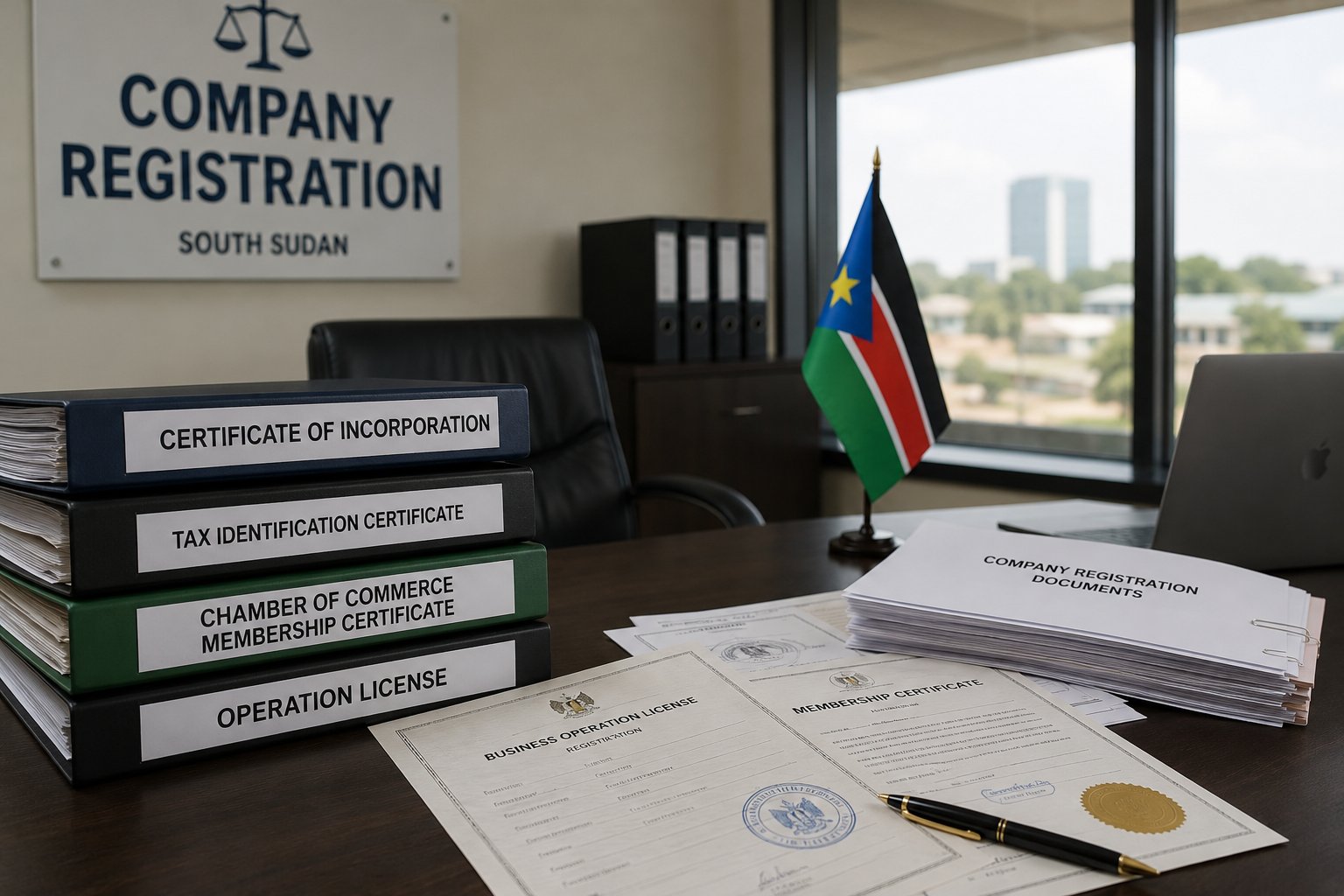
International Trade in South Sudan: Legal and Business Opportunities for Investors
International trade remains one of the most important drivers of economic growth, market expansion, and investment opportunity in South Sudan. As businesses look beyond domestic markets and governments across Africa continue to promote regional and continental trade integration, South Sudan is increasingly relevant as a frontier market for cross-border commerce, investment, logistics, and supply chain development.
For investors, traders, manufacturers, logistics operators, and service providers, South Sudan presents a market with growing commercial potential. The country’s position within East Africa, its membership in the East African Community, and its ongoing engagement with wider continental and global trade processes create important legal and business opportunities. At the same time, success in this market depends on understanding the legal, regulatory, and institutional issues that shape international trade in practice. South Sudan has been a full member of the East African Community since 5 September 2016, and the EAC now describes itself as a bloc of eight partner states.
Why International Trade Matters in South Sudan
International trade is important to South Sudan because it supports access to goods, services, capital, technology, and regional markets. It also plays a major role in sectors such as agriculture, construction, infrastructure, consumer goods, energy, telecom, transport, and professional services. For a developing economy, strong trade participation can improve supply chains, support industrial growth, widen consumer choice, and encourage private sector expansion.
In South Sudan, this is especially significant because the country relies heavily on imports for many essential goods and services, while also holding long-term export potential in agriculture, natural resources, and value-added production. This creates room for both trading businesses and investors interested in distribution, logistics, processing, warehousing, border services, and trade-related infrastructure.
South Sudan’s Regional and International Trade Position
South Sudan’s position in regional trade is increasingly important. As an East African Community member, it is connected to a wider regional market and to an institutional framework that promotes trade cooperation, customs integration, and economic coordination among partner states. The EAC states that its partner states now include Burundi, the Democratic Republic of Congo, Kenya, Rwanda, Somalia, South Sudan, Uganda, and Tanzania.
South Sudan is also still in the process of acceding to the World Trade Organization. The WTO states that South Sudan’s Working Party was established in December 2017, and accession work remains ongoing. WTO membership matters because it would further integrate South Sudan into the global trading system and strengthen alignment with international trade rules, transparency obligations, and market disciplines.
At the continental level, South Sudan signed the Agreement Establishing the African Continental Free Trade Area on 21 March 2018. However, the African Union treaty record shown in the retrieved source does not list a deposited instrument of ratification for South Sudan in that record. This means the AfCFTA remains an important strategic framework for South Sudan, but its full domestic trade effect depends on further legal and implementation steps.
The Role of the Ministry of Trade and Industry
The Ministry of Trade and Industry is the lead public institution responsible for trade, industry, and private sector development in South Sudan. Its official website describes the ministry as the lead policy adviser to government on trade, industrial and private sector development, with responsibility for the implementation of policies for the promotion, growth, and development of domestic and international trade and industry. That institutional role is important for investors because trade activity often intersects with policy guidance, licensing, market regulation, standards, and business facilitation.
The ministry also launched its official website in October 2025, which is a useful signal of increasing formalization and public-facing access to trade information.
Key Legal Issues in International Trade
Cross-border business in South Sudan requires more than commercial ambition. It requires legal planning. International trade transactions often involve company registration, customs procedures, import documentation, product compliance, contract negotiation, tax exposure, payment terms, foreign suppliers, transport risk, and dispute management.
Some of the main legal issues businesses should consider include:
1. Contract Structure
A cross-border contract should clearly define the goods or services, delivery terms, payment structure, inspection arrangements, governing law, force majeure provisions, dispute resolution, and tax responsibility. Weak drafting can expose businesses to payment disputes, customs problems, and enforcement difficulties.
2. Customs and Import Compliance
Businesses involved in importation should understand the applicable customs requirements, clearance procedures, product classification, duties, fees, and documentary obligations. Import delays, classification disputes, or weak documentation can create serious operational disruption.
3. Standards and Regulatory Compliance
Certain goods and services may be subject to quality standards, technical requirements, certifications, or regulatory approvals. Businesses trading in consumer products, food items, industrial materials, telecom equipment, pharmaceuticals, or construction inputs should verify compliance before shipment or distribution.
4. Tax and Payment Exposure
International trade frequently raises tax issues, especially in relation to customs duties, withholding tax, service fees, technical support arrangements, royalties, and cross-border payments. Businesses should ensure that contracts and invoices reflect the true nature of the transaction and that payment obligations are structured carefully.
5. Dispute Resolution and Enforcement
International transactions often become difficult when the contract does not properly address dispute resolution. Arbitration clauses, court jurisdiction clauses, notice provisions, and enforcement strategies should be considered from the beginning.
Business Opportunities in International Trade
International trade in South Sudan presents several areas of opportunity for investors and businesses. These include:
- import and distribution of consumer and industrial goods
- logistics and freight services
- warehousing and supply chain operations
- agro-processing and agricultural trade
- cross-border construction and infrastructure supply
- ICT and telecom equipment supply
- professional and technical services linked to trade and investment
- regional market entry and commercial representation
As trade systems become more integrated across East Africa and Africa more broadly, businesses that establish early and structure themselves properly may gain a strong competitive position.
Why Legal Support Matters for Cross-Border Business
International trade transactions often appear straightforward at the commercial level, but the legal risk usually sits beneath the surface. A delayed shipment, a customs query, an unclear invoice, a licensing issue, a non-compliant product, or a weak dispute clause can quickly affect an entire transaction.
That is why businesses trading in or through South Sudan should seek legal advice at the structuring stage, not only after a problem has arisen. Preventive legal support helps businesses reduce uncertainty, protect payments, allocate risk properly, and remain compliant with the relevant laws and regulations.
How Legalline Law Chambers Can Help
Legalline Law Chambers advises businesses, investors, and institutions on legal and regulatory issues affecting international trade in South Sudan. Our support includes contract drafting and review, trade-related compliance advice, company setup, regulatory approvals, tax and withholding analysis, customs-related legal guidance, dispute prevention, and legal representation.
We support both local and international clients seeking to establish, expand, or protect their commercial interests in South Sudan’s developing trade environment.
Conclusion
International trade in South Sudan offers real legal and business opportunities for investors willing to approach the market with care, structure, and local insight. The country’s position within the East African Community, its ongoing WTO accession process, and its wider continental trade relevance all make it an important market to watch.
For businesses engaging in cross-border trade, success depends on more than demand. It depends on sound legal planning, strong documentation, regulatory compliance, and reliable local support. With the right approach, South Sudan can serve as an important gateway for commercial growth and regional business expansion.