 Firm News
South Sudan Open for Business and Investment
South Sudan continues to offer real opportunities for investors, traders, and project developers. With a formal investment framework, electronic business …
Read More
South Sudan’s legal environment continues to develop in ways that matter directly to businesses, investors, employers, contractors, NGOs, and regulated institutions. Recent developments show stronger movement in tax administration, labour compliance, digital business registration, and trade-related regulation. These changes are shaping how organizations enter the market, manage internal compliance, structure transactions, and respond to regulatory risk. The most visible recent measures include the publication of the Financial Act FY 2024–2025 by the Ministry of Finance and Planning, the South Sudan Revenue Authority’s implementation circular that took effect on 2 December 2024, the continued operational relevance of the Labour Regulations, 2023, and the Ministry of Justice’s shift to electronic business registration.
One of the clearest legal trends in South Sudan is the growing practical importance of tax law and tax administration. The Ministry of Finance and Planning published the Financial Act FY 2024–2025 on 21 February 2025, and the South Sudan Revenue Authority has also made the law available through its official resources. In addition, the SSRA issued a circular to operationalize the Financial Act, stating that the circular would become effective on 2 December 2024. This shows that businesses must pay close attention not only to the principal tax laws, but also to annual fiscal measures and administrative implementation notices.
For businesses, this means tax risk is now a more active compliance issue. Companies need to monitor how annual finance measures affect tax heads, customs-linked charges, sector fees, and broader compliance obligations. In practice, stronger revenue enforcement often increases the importance of documentation, reporting discipline, and legal review of assessments, penalties, and authority decisions. This last point is an inference based on the combination of the published Financial Act and the SSRA implementation circular.
Employment law in South Sudan is also moving toward more detailed compliance expectations. The Labour Act, 2017 remains the central employment statute, and the Ministry of Labour describes it as the framework for minimum conditions of employment, labour relations, labour institutions, dispute resolution, and workplace health and safety. More recently, the Labour Regulations, 2023 added practical regulatory detail to the labour framework.
This trend matters for employers because labour compliance is no longer only about having a contract in place. It increasingly involves workplace procedures, HR documentation, disciplinary process, compliance with permit-related rules where foreign workers are involved, and stronger internal systems for handling employment issues. That conclusion is a practical reading of the Ministry’s labour framework together with the 2023 regulations.
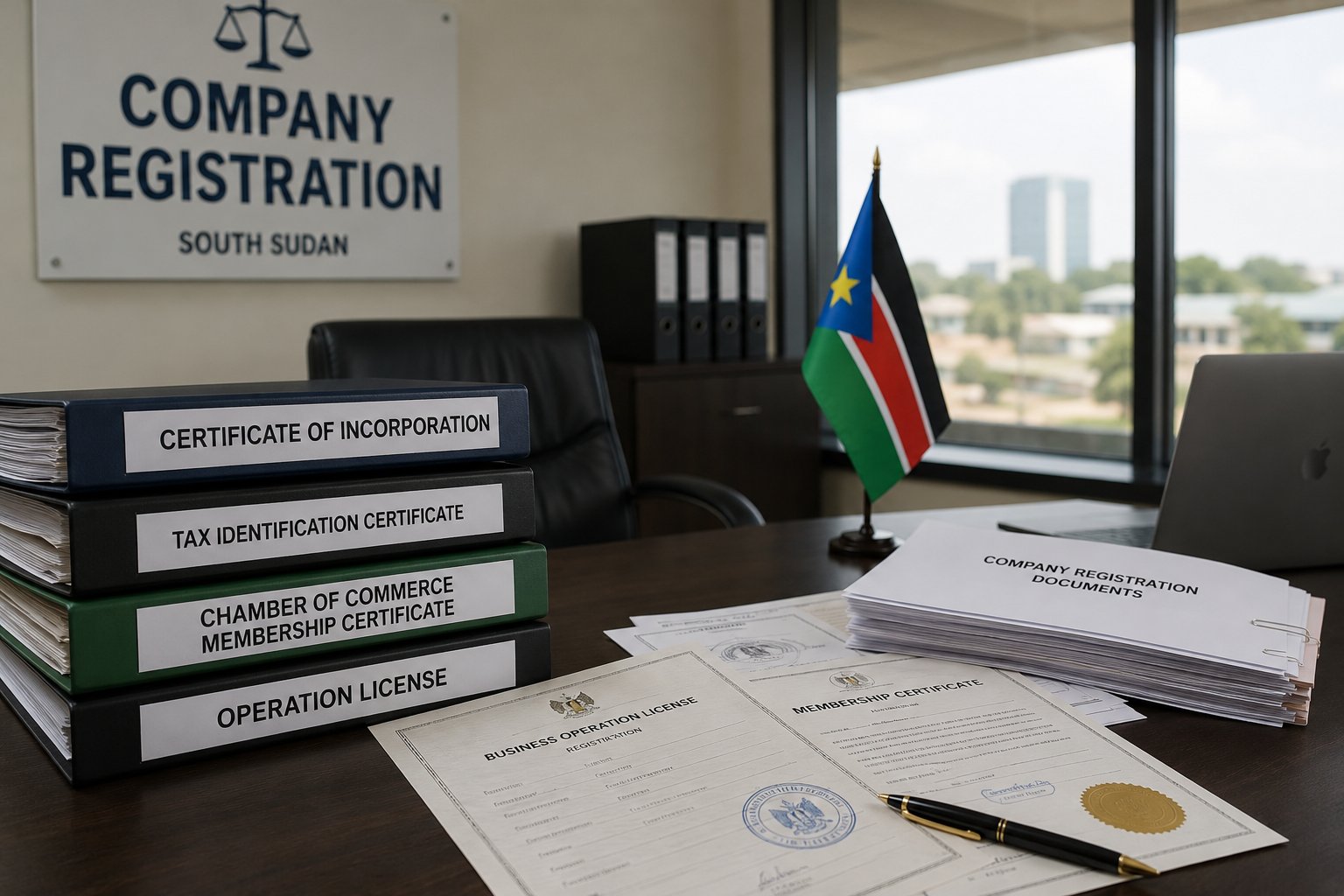
South Sudan has also taken visible steps toward administrative modernization in business registration. The Ministry of Justice and Constitutional Affairs announced the launch of electronic business registration in July 2023, stating that the new system was intended to make registration accessible online. In addition, a strategic planning document for the Directorate of Registration states that registration of a business, whether a company or partnership, is currently done electronically.
This is an important legal and commercial trend because easier registration can improve market entry, reduce unnecessary delay, and support more formal participation in the economy. It also suggests that businesses should expect increasing emphasis on proper filings, updated records, and closer interaction with formal registration systems rather than purely manual processes. That final point is an inference from the digitization measures published by the Ministry.
For businesses involved in imports, exports, logistics, procurement, and cross-border supply chains, customs and trade compliance remain central. The South Sudan Revenue Authority presents itself as the authority that creates systems and policies around taxation and collects revenue, and its official resources page includes current legal and operational materials, including the Financial Act FY 2024–2025. This reflects a more structured compliance environment for traders and import-dependent businesses.
The practical implication is clear: businesses moving goods across borders need stronger legal attention to customs procedures, tax exposure, and documentation. This is especially relevant in sectors that rely on imported materials, equipment, fuel, packaging, or technical supplies. This is a practical inference from the official tax and customs administration material now being published and operationalized more visibly.
A wider legal trend is the growing importance of governance, internal compliance, and legal risk management. As tax administration becomes more active, labour rules become more detailed, and registration and regulatory systems become more formalized, businesses need stronger internal controls and more reliable documentation. This is particularly important for companies with foreign ownership, donor-funded operations, regulated activities, or significant contractual exposure.
In practical terms, this means boards, directors, founders, and management teams should pay closer attention to record-keeping, compliance reviews, contract controls, employment systems, and regulatory engagement. Many disputes and enforcement issues are easier to prevent where governance and compliance are treated as ongoing legal functions rather than afterthoughts. This is an inference drawn from the direction of the recent legal and administrative developments cited above.
The legal trends emerging in South Sudan are not abstract policy developments. They have direct effects on how businesses register, hire, structure transactions, manage tax exposure, and deal with public authorities. For local businesses, they affect operational compliance and risk. For foreign investors, they affect market entry and corporate structure. For employers and institutions, they affect workplace systems and dispute prevention.
South Sudan’s legal and regulatory environment is continuing to mature, with recent developments pointing toward stronger tax administration, more detailed labour compliance, digital registration systems, and a more structured business environment. Businesses that respond early by improving documentation, governance, and regulatory readiness will be better placed to operate with confidence and reduce legal risk.
At Legalline Law Chambers, we monitor legal and regulatory developments affecting business in South Sudan and advise clients on compliance, corporate structuring, tax issues, employment matters, contracts, and dispute management.
 Firm News
South Sudan continues to offer real opportunities for investors, traders, and project developers. With a formal investment framework, electronic business …
Read More Firm News
South Sudan Expands Digital Business Registration as Compliance Demands Grow
Read More
Apr 28, 2026