Taxation in South Sudan: A Practical Guide for Businesses and Investors
For any business operating in South Sudan, taxation is a central legal and commercial issue. It affects how a business is structured, how contracts are drafted, how employees are engaged, how payments are made, and how risks are managed. For local businesses, foreign investors, contractors, consultants, and employers, a clear understanding of the tax system is essential for lawful and efficient operations.
In South Sudan, tax compliance should be treated as part of the foundation of doing business. A company may be properly incorporated and licensed, but if its tax position is weak, unclear, or poorly documented, it may still face penalties, disputes, delayed payments, difficulty obtaining tax clearance, or avoidable exposure before the revenue authorities. Sound tax planning helps a business protect its cash flow, maintain compliance, and reduce unnecessary legal and financial risk.
The Importance of Tax Planning from the Start
Many businesses only pay close attention to taxation after operations have started. In practice, that is often too late. Tax issues begin to arise as soon as a business hires staff, signs contracts, imports goods, invoices for services, or receives payments. Each of these activities can trigger obligations that must be understood and managed correctly.
For that reason, tax should be considered at the earliest stage of market entry or business expansion. Investors and companies should assess the proper legal structure of the business, the expected tax treatment of income, the design of payroll arrangements, the nature of payments under contracts, and the documentation needed to support compliance. Early review creates certainty and reduces the chance of future disputes.
The Role of the South Sudan Revenue Authority
The South Sudan Revenue Authority plays the central role in tax administration, registration, collection, and enforcement. Businesses operating in South Sudan are generally expected to register, obtain a Taxpayer Identification Number, maintain proper records, and comply with filing, withholding, and payment obligations as required by law.
This means that tax compliance is no longer something that can be handled casually. Businesses should ensure that their tax records accurately reflect their corporate structure, business activity, payroll arrangements, and operational profile. Errors or inconsistencies at this stage can later affect returns, assessments, tax clearances, and communication with the authorities.
Business Profit Tax
Business profit tax is one of the most significant tax concerns for companies operating in South Sudan. Any business earning income in the country should carefully assess how its profits will be treated for tax purposes and whether its records are sufficient to support that position.
This requires attention to several issues, including the source of income, allowable deductions, the treatment of operating expenses, and the legal identity through which the business is trading. For foreign investors, this is especially important where there is a local business presence, contracts performed in South Sudan, local employees, or a continuing operational footprint. A business should not wait until a dispute or audit arises before reviewing these matters.
Personal Income Tax and Payroll Compliance
Employers in South Sudan also need to pay close attention to personal income tax and payroll obligations. Employee compensation is not limited to basic salary. In practice, accommodation, transport support, allowances, school fees, insurance, reimbursements, and similar benefits may all raise tax questions depending on how they are structured and documented.
This is why payroll should be reviewed as a legal compliance matter, not simply as an accounting exercise. Poorly structured staff packages may expose an employer to additional tax liability or disputes over what should have been withheld. A well-advised employer will structure employee benefits carefully, document them clearly, and ensure that deductions and remittances are managed properly.
Withholding Tax and Payment Risk
Withholding tax is one of the most sensitive and frequently disputed aspects of tax compliance in South Sudan. It often affects payments made under consultancy agreements, service contracts, technical support arrangements, rental payments, royalties, non-resident transactions, and government-related contracts.
The legal characterization of a payment is very important. A vague contract or poorly prepared invoice can create unnecessary exposure. For example, where professional fees, reimbursable expenses, and direct third-party costs are mixed together without clarity, the entire amount may be questioned or treated in a way the parties did not intend. Businesses should therefore take care to define the nature of payments properly and to align contractual language with the actual commercial arrangement.
Why Contract Drafting Matters
Tax compliance is closely connected to contract drafting. A strong agreement should clearly state what services are being provided, how fees are calculated, which expenses are reimbursable, and whether third-party costs are separate from professional fees. These details matter because they can directly affect how a payment is treated for tax purposes.
This is particularly important in sectors such as construction, telecom, consulting, infrastructure, donor-funded programming, and cross-border service delivery, where multiple types of payments often appear in one transaction. Careful drafting reduces uncertainty, supports proper accounting, and strengthens the business’s position if questions arise later.
Taxpayer Registration and Business Alignment
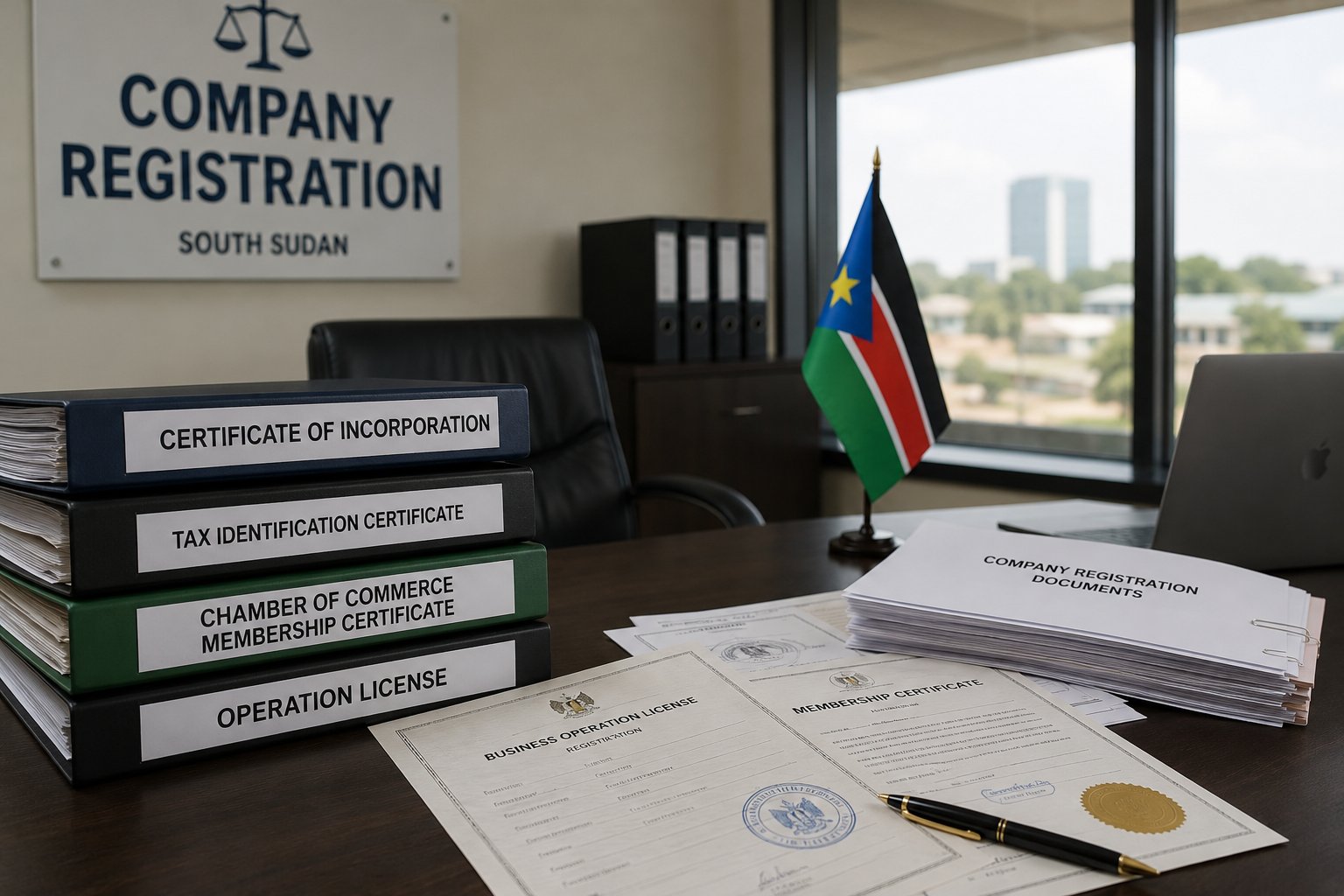
Taxpayer registration is one of the first practical steps a business should take. Before carrying out substantial operations, a company should ensure that it is properly registered with the South Sudan Revenue Authority and that its tax profile is aligned with its legal and operational records.
The company name, ownership documents, registration details, TIN information, nature of business, and internal payroll setup should all be consistent. A mismatch between corporate records and tax records can lead to complications in filing, payment processing, compliance reviews, and clearance procedures. Businesses should therefore treat registration as a substantive compliance step, not a mere formality.
Record Keeping and Supporting Documents
Good record keeping is essential in tax compliance. A business should retain contracts, invoices, receipts, payroll records, bank statements, tax payment records, withholding evidence, and supporting documents for all significant business expenses. This is important because a valid business expense may still be challenged if it is not properly documented.
Strong documentation supports deductions, explains payments, and helps a business respond effectively to questions from the authorities. Weak documentation, by contrast, can convert an otherwise manageable tax issue into a larger legal and financial problem.
Penalties and Exposure for Non-Compliance
Failure to comply with tax obligations may expose a business or employer to penalties, interest, administrative action, and regulatory difficulties. Non-compliance may arise from failure to register properly, failure to withhold, failure to remit taxes on time, weak payroll treatment, or poor documentation.
The cost of correcting tax issues late is often much higher than the cost of setting up a compliant structure from the beginning. For that reason, businesses should see tax compliance as an important part of overall corporate governance and risk management.
Practical Steps for Businesses and Investors
Businesses and investors entering the South Sudan market should take a practical and preventive approach. Before starting operations, they should:
- confirm the most suitable business structure
- review tax exposure under key contracts
- assess payroll and employee benefit arrangements
- identify potential withholding tax obligations
- consider customs and import-related issues where relevant
- establish proper accounting and documentation procedures
- align tax registration with corporate and operational records
These steps help reduce risk, create operational clarity, and support long-term compliance.
How Legalline Law Chambers Can Help
Legalline Law Chambers advises businesses, investors, employers, and institutions on tax and regulatory compliance in South Sudan. Our support includes tax compliance advisory, withholding tax analysis, payroll tax review, contract drafting and review, business structuring, legal opinions on the treatment of fees and reimbursements, and regulatory support before the relevant authorities.
We work with clients to identify tax risks early, structure transactions carefully, and support lawful business operations in a changing regulatory environment.
Conclusion
Taxation in South Sudan should be approached with care, clarity, and proper legal guidance. For businesses and investors, tax is a key part of market entry, operations, and long-term stability. Companies that assess their tax obligations early, maintain proper records, and structure their transactions carefully are better placed to avoid disputes, manage compliance, and operate with confidence.
For local enterprises and foreign investors alike, sound tax planning is a core part of doing business successfully in South Sudan.